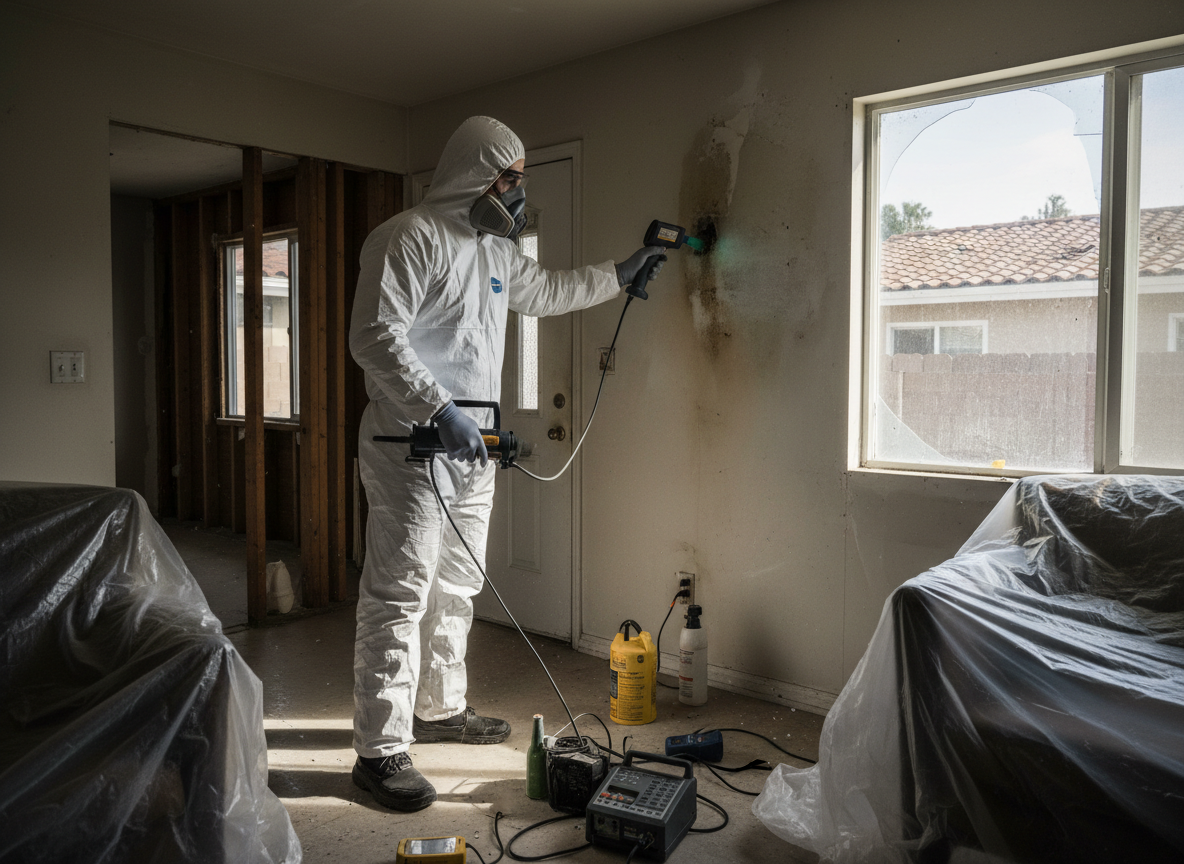
Canoga Park homes built before the 1980s often feature stucco exteriors and slab foundations that trap moisture when warm Mediterranean summers drive heavy air conditioning use. Condensation forms inside wall cavities near Pierce College and Warner Center, feeding hidden mold growth behind baseboards and in HVAC returns. Air sampling with spore traps and moisture meters reveals these pockets before they spread into living spaces during the dry season when residents close windows tight.
Testing protocols here account for Los Angeles County dust and pollen loads that mix with mold spores after Santa Ana wind events. Technicians pull samples from multiple zones including attics above Westfield Topanga retail corridors and crawlspaces in single-story tracts near Winnetka. Results distinguish between common outdoor Aspergillus and indoor amplification caused by roof leaks or poor grading on the flat valley terrain.
Edge cases include false negatives from recent cleaning or painting that masks odors yet leaves viable colonies in insulation. We cross-check visual inspections with thermal imaging on properties bordering Chatsworth to locate temperature differentials indicating active moisture. Reports include chain-of-custody documentation suitable for real estate transactions or insurance claims common in this area.
Technician insight
In Canoga Park, the thing that catches most people out with Air quality and mold testing is how our hot dry summers push AC units to pull moisture from slab foundations in pre-1980 homes near Saticoy Street, creating hidden colonies that only show up on air samples taken after the system has run for several hours.
Moisture Behind Kitchen Cabinets
A Warner Center condo owner noticed musty smells after a summer heatwave. We found elevated Aspergillus levels in air samples from the kitchen and living room. Thermal imaging revealed condensation behind the cabinets from an AC condensate line leak. Targeted drying and source repair cleared the readings on retest.
How it works
- 1
Site Assessment
Walk through the property noting HVAC layout, recent water events, and ventilation patterns typical of Canoga Park construction.
- 2
Sample Collection
Deploy air cassettes, surface swabs, and moisture probes at targeted locations including attics and wall cavities.
- 3
Laboratory Analysis
Submit samples to an accredited lab for spore count identification and comparison against outdoor baselines.
- 4
Report Delivery
Provide written findings with photos, lab results, and clear next-step recommendations within 48 hours.
Pricing
Pricing varies by square footage, number of samples, and whether rush lab processing is required; upfront quotes given after initial walkthrough.