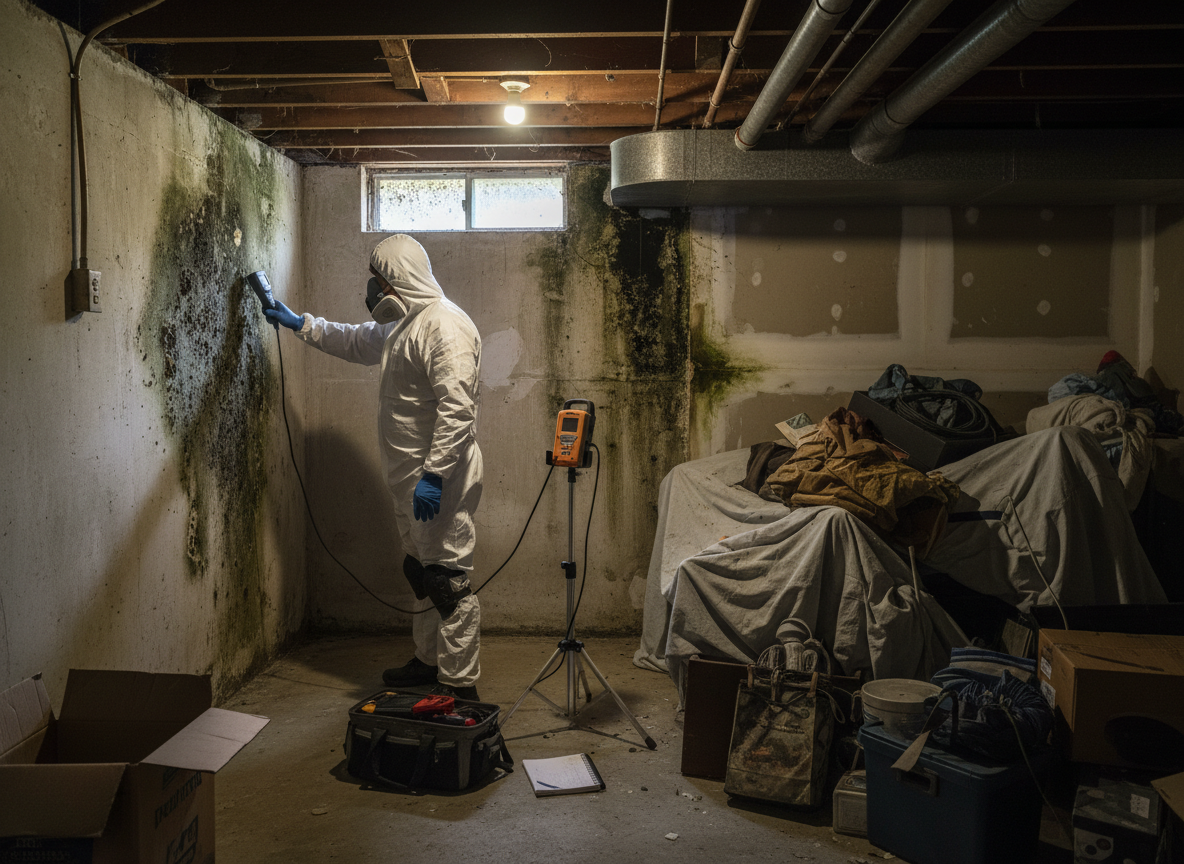
Basement mold inspection in Canoga Park starts with checking for moisture intrusion common in mid-century homes built on the valley floor. Irrigation runoff from properties near Pierce College and Warner Center often collects against foundations during the occasional winter rains, even though summers stay hot and dry. Inspectors look behind finished walls, under slabs, and around sump areas where older plumbing and poor grading allow hidden growth to spread without visible signs on the surface.
Edge cases appear frequently in Canoga Park because many basements sit below grade with limited ventilation. Concrete block walls and original wood framing absorb and hold humidity differently than newer construction in nearby Woodland Hills or Chatsworth. Technicians check for elevated readings on moisture meters and note any musty odors that travel through HVAC returns connected to upper floors.
Los Angeles County building practices from earlier decades mean some basements lack proper vapor barriers or exterior waterproofing. During inspection, attention turns to soil contact points and any recent landscape changes around homes in Winnetka that redirect water toward the structure. This prevents missing growth that only becomes active after the next rain event.
Homeowners receive a written report that maps affected zones and recommends next steps without assuming remediation is always required. The process respects the dry Mediterranean pattern while accounting for the micro-climates created by the surrounding hills and dense residential lots.
Technician insight
In Canoga Park, the thing that catches most people out with Basement mold inspection is how the hot dry summers hide ongoing moisture from lawn sprinklers and poor drainage around older homes near Warner Center. The valley floor clay holds water against foundations for weeks after any rain, so growth stays active behind drywall even when the rest of the house feels bone dry.
Warner Center Home with Recurring Musty Odor
A homeowner in Canoga Park noticed a persistent smell in the finished basement after winter rains. Inspection found elevated moisture along the north wall where runoff from the neighboring property pooled against the foundation. Air samples confirmed mold behind the paneling. The report outlined targeted removal areas and ventilation upgrades that stopped the odor without full basement gutting.
How it works
- 1
Site Walk and Visual Survey
Technician examines all accessible basement areas, noting water stains, efflorescence, and ventilation issues common in Canoga Park foundations.
- 2
Moisture and Humidity Readings
Multiple meter readings taken on walls, floors, and framing to locate hidden damp zones created by local irrigation or seasonal rain.
- 3
Air Sampling and Surface Testing
Samples collected where readings indicate risk, then compared against outdoor baselines to confirm whether mold is actively growing.
- 4
Report and Recommendations
Detailed findings delivered with photos and clear next steps based on conditions found in the specific Canoga Park property.
Pricing
Upfront quote provided after the inspection based on property size and access conditions.