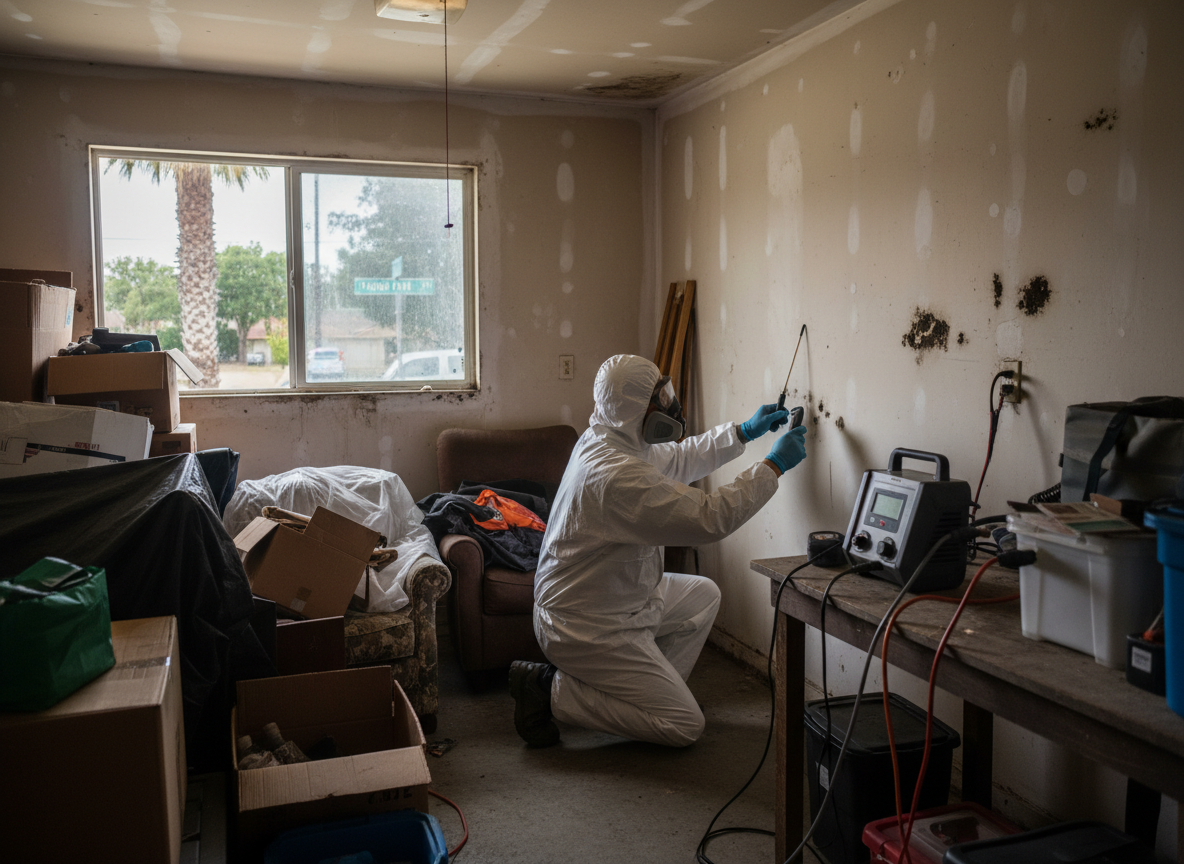
Canoga Park homes built in the 1950s and 1960s often feature stucco exteriors and crawl spaces that trap moisture from irrigation runoff near Warner Center. Warm dry summers mask slow leaks from aging pipes until black mold appears on drywall near Pierce College neighborhoods. A proper inspection checks attic ventilation, bathroom exhaust fans, and foundation grading where summer heat drives condensation against cooler soil.
Los Angeles County building codes require addressing visible moisture before any remediation, so inspectors map water stains and use moisture meters on subfloors in homes between Saticoy Street and Topanga Canyon Boulevard. Hot dry conditions mean air conditioning units run constantly, creating hidden drip lines inside walls that only surface during rare winter rains. Skipping these checks leads to repeated growth in Winnetka and Chatsworth border properties.
Inspectors also review roof penetrations around skylights common in Canoga Park ranch homes and test for elevated humidity in enclosed patios added during the 1980s building boom. These details matter because the area's flat terrain allows water to pool against foundations when drainage is poor. Early detection prevents larger issues that affect resale value in the local market.
Technician insight
In Canoga Park the thing that catches most people out with home mold inspection is the combination of 1960s slab-on-grade homes and constant AC use during hot dry summers. Condensation lines inside walls stay hidden until winter rains push moisture through poor perimeter grading near Warner Center.
Hidden moisture behind bathroom wall
Homeowner in a 1958 Canoga Park ranch near Westfield Topanga noticed musty odor after heavy AC use. Inspection located elevated moisture along the shared wall with the laundry room where an old pipe joint had leaked slowly for months. We mapped the extent, advised on source repair, and confirmed no active growth beyond the affected drywall section.
How it works
- 1
Initial Phone Assessment
Gather details on home age, recent leaks, and symptoms reported by the owner.
- 2
On-Site Visual Walkthrough
Examine all accessible areas including attics, crawl spaces, and exterior grading around the property.
- 3
Moisture and Humidity Testing
Use meters and thermal imaging to locate hidden dampness behind walls and under floors.
- 4
Written Findings Report
Document locations, photos, and recommended next steps delivered the same day.
Pricing
Pricing based on square footage and number of stories; upfront quote provided after the initial phone assessment.