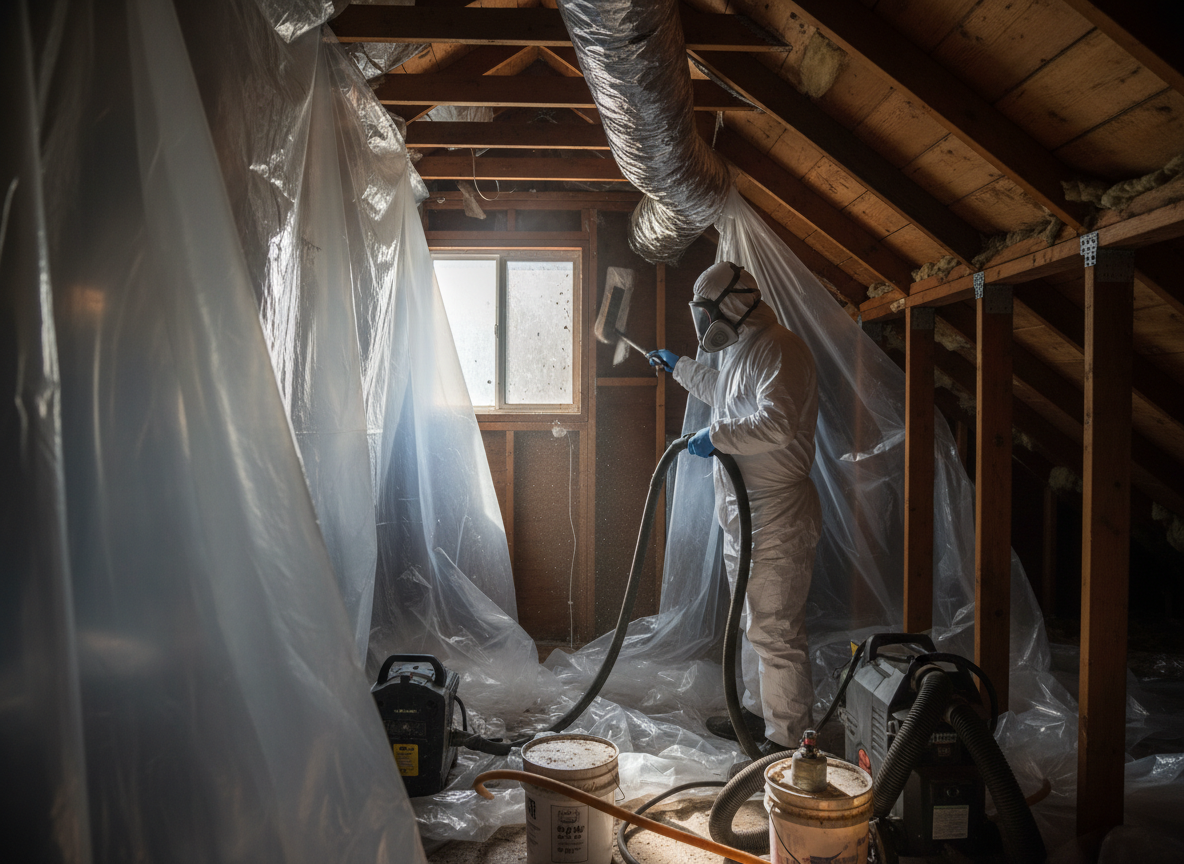
Ventilation mold remediation in Canoga Park homes often starts with the HVAC ducts that run through attics and crawl spaces in post-war housing stock near Pierce College. Hot dry summers drive constant air conditioning use, creating condensation on poorly insulated metal ducts where spores settle and spread through the system. Technicians must isolate the affected runs, use HEPA-filtered negative air machines, and clean or replace sections without disturbing settled dust that can recontaminate living areas in Warner Center condos.
Los Angeles County building practices from the 1960s and 1970s left many Canoga Park residences with flex duct and fiberglass-lined plenums that trap moisture when winter rains follow the long dry season. Remediation requires removing contaminated liner material rather than surface wiping, then applying EPA-registered antimicrobials only after source moisture is corrected. Failure to address the return air side allows spores to recirculate into bedrooms and living spaces even after visible growth is gone.
Work in neighborhoods bordering Chatsworth and Winnetka frequently involves reaching rooftop units on single-story ranch homes where access is limited and wind-blown dust from the surrounding hills adds to the load. Proper sealing of supply and return registers during the process prevents cross-contamination to unaffected zones, and post-remediation verification with air sampling confirms clearance before the system is returned to service.
Technician insight
In Canoga Park the thing that catches most people out with ventilation mold remediation is the 1970s flex duct runs tucked behind drywalled ceilings in homes near Westfield Topanga where constant summer AC use creates hidden condensation that homeowners never see until the entire system has to be opened up.
Hidden Growth in Warner Center Townhome
A homeowner noticed musty odors from the vents but no visible mold on walls. Inspection found condensation inside the main trunk line running through the attic. We isolated the system, removed the saturated liner, cleaned the metal, and restored airflow after drying and clearance testing.
How it works
- 1
Initial Assessment
Inspect all accessible duct runs, registers, and the air handler for visible growth and moisture sources using borescopes and moisture meters.
- 2
Containment Setup
Isolate the HVAC system with plastic sheeting and negative air pressure to prevent spores from migrating into living spaces during cleaning.
- 3
Source Removal
Remove contaminated insulation, clean metal surfaces with HEPA vacuums, and treat remaining surfaces with appropriate antimicrobials.
- 4
Drying and Verification
Ensure all components are dry, reassemble the system, and perform post-cleaning air sampling to confirm remediation success.
Pricing
Cost depends on the length and accessibility of affected duct runs plus whether insulation replacement is needed; upfront quotes provided after inspection.