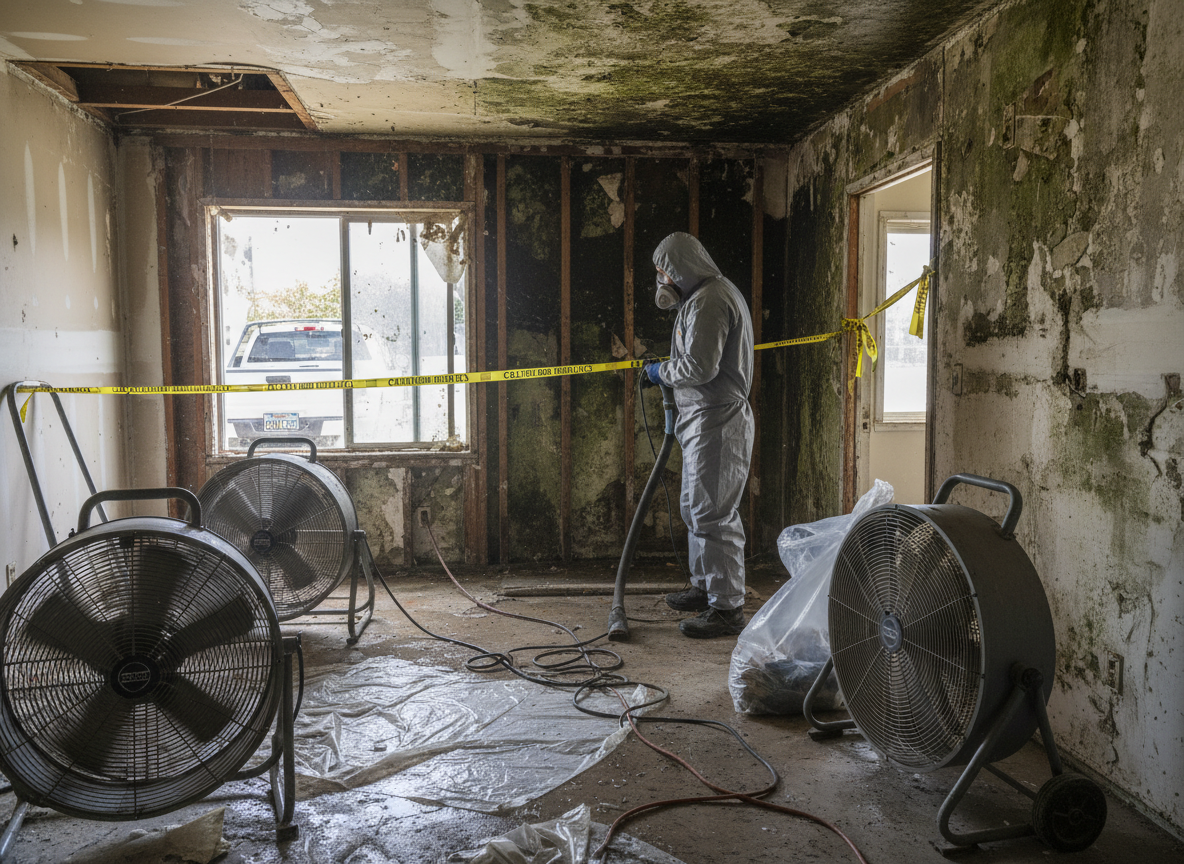
Water intrusion from roof penetrations or plumbing failures in Canoga Park's 1950s-1970s ranch homes often travels behind stucco and into cellulose insulation near Warner Center. The warm Mediterranean climate with hot dry summers speeds surface drying but leaves hidden colonies inside wall cavities and attics, especially in properties close to Pierce College where irrigation overspray adds steady moisture. Remediation requires negative-pressure containment and HEPA air scrubbing to prevent cross-contamination into living spaces, followed by removal of affected drywall and baseboards rather than surface treatments alone.
Los Angeles County building practices in these neighborhoods frequently include unvented crawl spaces and flat roofs that trap condensation during rare winter rains. Technicians must map moisture with infrared cameras because visible staining on ceilings rarely shows the full extent of growth along floor joists. Antimicrobial rinses are applied only after physical removal; fogging without source correction fails when summer heat reactivates dormant spores weeks later.
Post-remediation verification includes air sampling and moisture readings below 15 percent on remaining wood framing. Homeowners near Westfield Topanga or in adjacent Woodland Hills, Chatsworth, and Winnetka often discover the issue only after HVAC condensation lines clog during peak summer loads. Skipping professional drying equipment sized for the dry local air leads to recurring growth once humidity rebounds in fall.
Technician insight
In Canoga Park the thing that catches most people out with water damage mold remediation is how the hot dry summers mask leaks behind stucco until they reach the insulation in 1960s homes near Pierce College; by then the growth has already traveled along the top plates into neighboring rooms.
AC Condensation Leak in Canoga Park Ranch Home
A homeowner near Warner Center noticed ceiling spots after a summer heat wave. Inspection revealed a clogged condensate line that had dripped into the attic insulation for months. Crews isolated the attic, removed saturated material, dried the joists, and verified clearance before reinstalling new insulation.
How it works
- 1
Initial Assessment
Technicians inspect for moisture sources using meters and thermal imaging while documenting affected materials in Canoga Park homes.
- 2
Containment Setup
Plastic barriers and negative air machines isolate the work zone to protect adjacent rooms and hallways.
- 3
Material Removal
Cut out and bag water-damaged drywall, insulation, and trim, then clean exposed framing with HEPA vacuums.
- 4
Drying and Verification
Deploy commercial dehumidifiers and air movers suited to the dry climate, then confirm dryness and clearance with third-party testing.
Pricing
Upfront quotes after inspection; final cost depends on square footage affected and any hidden damage discovered during demolition.